
Why Responsibility Changes Everything
Capability creates possibilities. Responsibility decides which possibilities become reality.

Dear friends,
In my previous letter, I wrote that for more than forty years my work has remained remarkably consistent. What has changed is the timing.
AI is increasing our capability, increasing our visibility, and changing reality faster than ever before. Together, these changes are creating extraordinary opportunities to improve reality and a remarkable new generation of important problems worth solving.
That has led me to another realization.
Looking back, I think I’ve gradually come to understand that responsibility for solving important problems operates at three different levels. Today, I believe understanding those three levels is more important than ever.
Why now
The greater the supply of capability, the greater the demand for responsibility.
AI is making capability increasingly abundant. At the same time, changing reality is creating a growing number of important problems. Organizations—including AI companies themselves—need better ways to solve them.
As capability becomes increasingly available, people willing to accept responsibility for solving important problems become increasingly valuable.
I increasingly believe this will become one of the defining shifts of the AI era.
That is why the timing has changed.
Once I began to see this, another question naturally followed. If responsibility is becoming more valuable, where will lasting advantage actually come from?
What creates advantage
Capability creates possibilities.
Responsibility decides which possibilities become reality.
Capability can help us understand reality, discover important problems, analyze them, and propose remarkably good solutions. But capability cannot decide which problems are worth solving, who should take responsibility for solving them, or whether the work will actually be done.
Those decisions still belong to people.
I increasingly believe lasting advantage will come from combining AI capability with people willing to accept responsibility for solving important problems.
That is where lasting advantage is created.
That still left one question. How does responsibility actually change anything?
How it works
Responsibility creates commitment.
Commitment changes probability.
Reality decides the result.
Looking back, I think responsibility begins in a surprisingly simple way.
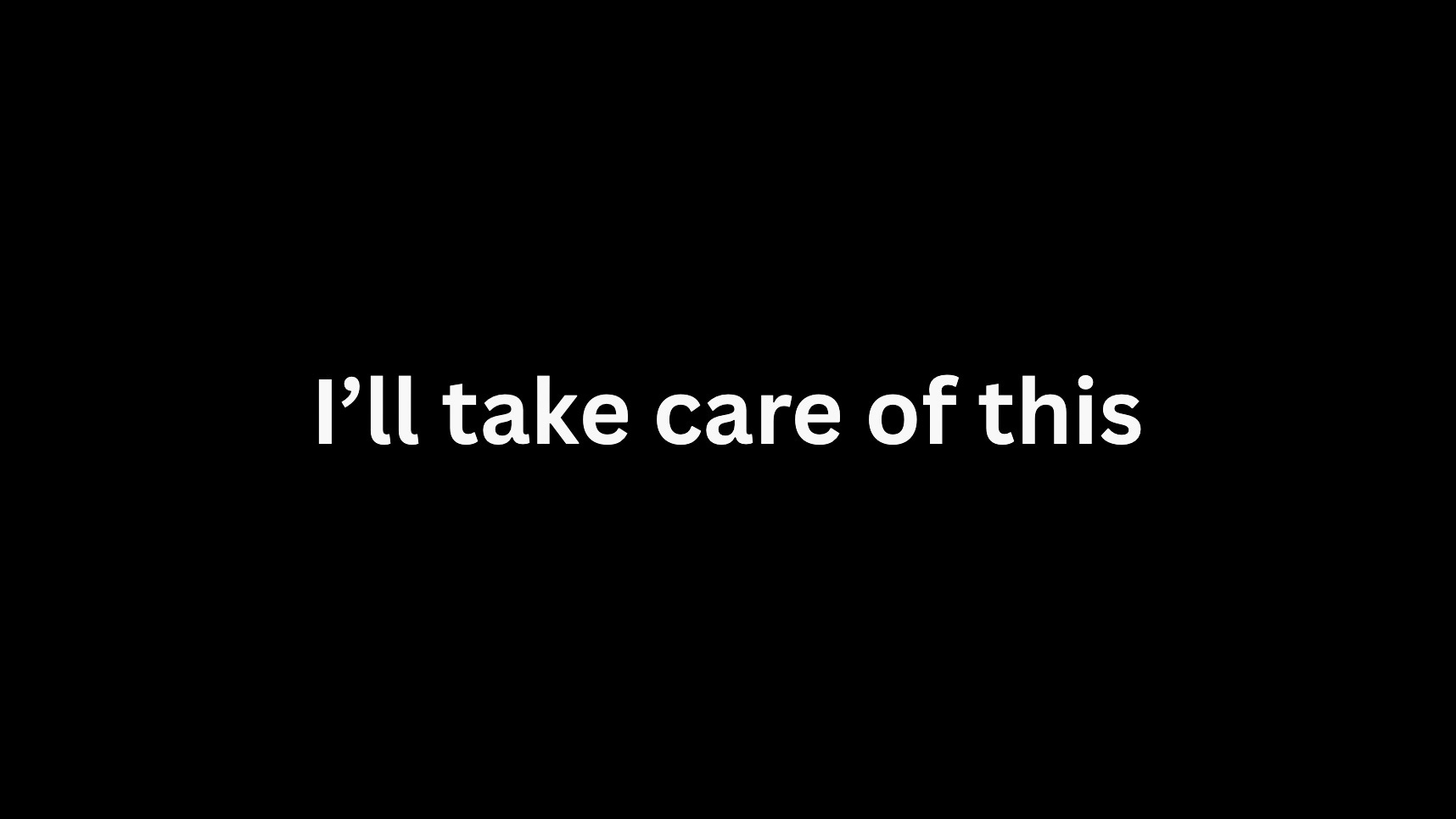
Someone looks at an important problem and says:
“I’ll take care of this.”
The person with the problem accepts that commitment.
Together, they agree on what success looks like.
That is the moment responsibility becomes real.
For most of my career, I’ve spent a great deal of time thinking about probability. Risk and reward. Uncertainty and confidence.
Only recently have I realized that responsibility is one of the strongest drivers of probability.
At that moment, the problem has not yet been solved. Reality has not yet improved, and success is still far from guaranteed.
Yet something fundamental has changed.
The probability of success is now higher than it was a moment before because someone has accepted responsibility for making a better reality more likely.
That realization changed how I think about responsibility.
It also changed how I think about value.
But that is another letter.
That is where value begins to move.
Looking back, I think I’ve finally understood why important problems have always attracted me.
Whenever I see a great deal of trapped value and an important problem standing in the way, I find it remarkably difficult not to say:
“I’ll take care of this.”
Perhaps that’s simply how I’m wired.
It certainly doesn’t describe everybody.
But it has shaped almost everything I’ve chosen to do.
I’m writing these letters because I’m always looking for two things: important problems worth solving, and people who want to help solve them.
If that way of thinking also feels natural to you, I hope you’ll continue reading.
Because in my next letter, I’d like to explore a question that surprised me for more than forty years.
When does value actually begin?
Let's do business together.